


Hand–arm vibration exposure monitoring is a regulatory requirement under the Control of Vibration at Work Regulations 2005 in the UK.
For employers responsible for health and safety, the challenge is not whether to monitor vibration exposure but how to do so in a way that reflects working conditions across shifting operational environments.
Many organisations still rely on estimated trigger times, manufacturer-declared vibration values, and spreadsheet-based assumptions. In controlled operational environments, these methods provide a baseline. However, exposure rarely follows a fixed pattern.
Why Exposure Accuracy Matters Under the Vibration Regulations
Hand–arm vibration exposure accumulates across:
- Different tools
- Variable trigger times
- Changing materials
- Multiple operators
If exposure is underestimated, employers may not have a clear understanding of how recorded exposure compares to the Exposure Action Value (EAV) or Exposure Limit Value (ELV).
Long-term vibration exposure is associated with vascular, neurological, and musculoskeletal symptoms commonly grouped under Hand–Arm Vibration Syndrome (HAVS).
For this reason, accurate exposure recording supports structured risk management and regulatory compliance.
The Legal Framework: Employer Responsibilities
Under the Control of Vibration at Work Regulations 2005, employers must:
- Conduct suitable and sufficient risk assessments
- Measure or estimate employee vibration exposure
- Calculate daily A(8) exposure
- Compare exposure against EAV and ELV thresholds
- Reduce exposure so far as reasonably practicable
- Provide health surveillance where required
The Health and Safety Executive (HSE) expects exposure assessments to be realistic and proportionate to operational risk.
The quality of exposure data directly influences the quality of compliance documentation.

Limitations of Traditional Monitoring Approaches
Many organisations rely on:
- Manufacturer-declared vibration magnitudes
- Estimated trigger time
- Spreadsheet-based calculations
- Periodic risk assessment updates
While these approaches may be acceptable in lower-complexity environments, they can become less reliable where:
- Tool condition varies
- Multiple tools are used in one shift
- Operators rotate across tasks
- Work patterns change daily
Manufacturer emission values are measured under controlled test conditions and may not reflect actual site usage.
Where exposure varies significantly, estimation-based systems increase reliance on assumption rather than recorded data.
What Structured HAVS Exposure Measurement Looks Like
Accurate vibration measurement focuses on recording exposure as work occurs, rather than reconstructing it retrospectively.
A structured measuring system will:
- Capture vibration exposure data during tool use
- Associate exposure with specific operators and tasks
- Support A(8) exposure calculation and review
- Produce centralised exposure reporting
This approach improves visibility into cumulative exposure across shifts and locations.
Measuring does not eliminate vibration exposure. It provides exposure data that can support informed decision-making within the employer's broader risk management framework.
The Role of Sensor-Based Measuring Technology
Advances in sensor technology have made vibration exposure monitoring more scalable in operational environments.
Modern systems may include:
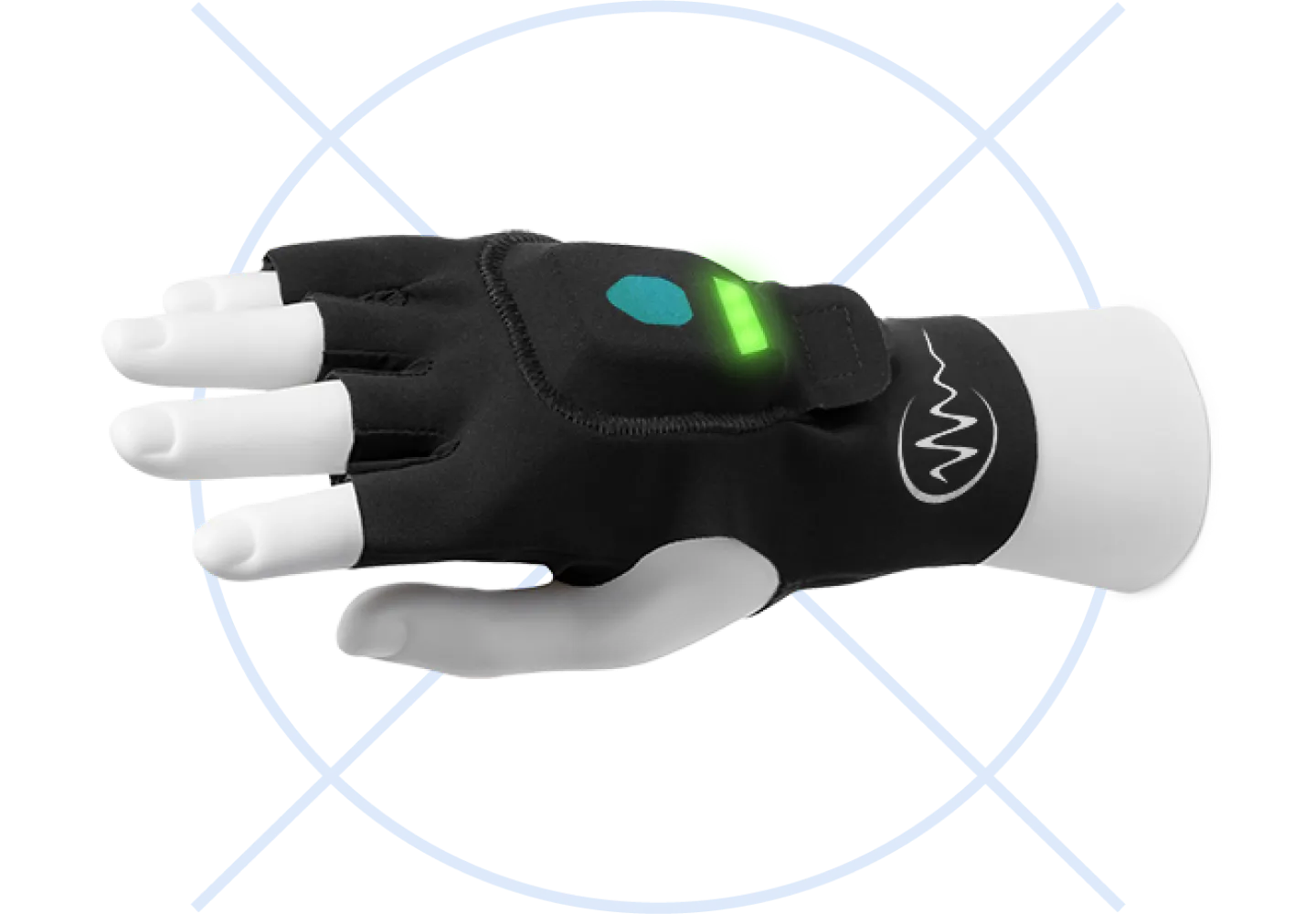
- A wearable vibration sensor that is at the palm of the hand
- A data capture unit
- Software supporting exposure calculation and reporting
- Centralised dashboards or reporting outputs
Rather than relying solely on estimated trigger times, exposure data is recorded and reviewed as part of ongoing safety processes.
Exactaform and HAV Sentry
HAV Sentry is a vibration exposure measurement system designed to capture structured exposure data across tools and tasks.
It supports organisations by:
- Recording operator vibration exposure
- Providing visibility into cumulative exposure
- Supporting A(8) calculation and review
- Producing structured exposure reports
- Guidance & recommendations on control methods
- Identifying & working on the removal of root causes
HAV Sentry does not replace required management controls, risk assessments, or health surveillance. It provides exposure data that can support internal compliance processes aligned with the Vibration Regulations.
Monitoring Exposure Against EAV and ELV
Structured exposure data allows organisations to:
- Review exposure in relation to EAV and ELV thresholds
- Identify cumulative exposure trends
- Inform task planning and rotation decisions
- Update risk assessments where required
Implementing control measures remain the responsibility of the employer.
Measurement supports documentation and review, but it does not enforce regulatory limits. It gives the data that then allows companies to make informed decisions on where to focus to enable them to work within them.
Supporting Health Surveillance Processes
Under UK regulations, health surveillance is required where exposure reaches or exceeds the Exposure Action Value.
Accurate exposure records may support:
- Determining when surveillance is required
- Providing exposure history during occupational health review
- Supporting documentation during HSE inspection
Clinical assessments and medical decisions remain the responsibility of qualified health professionals.
Practical Deployment in Operational Environments
Vibration measurement systems are typically deployed in practical configurations, such as:
- Individual wearable measurement units
- Team-based kits
- Ruggedised solutions for site environments
The objective is consistent exposure recording across projects, teams, and shifts.
Integration into existing safety management systems is essential.
A Structured Approach to Exposure Measurement
Accurate HAVS exposure measurement is fundamentally about documentation quality and exposure visibility.
For UK employers operating under the Control of Vibration at Work Regulations 2005, measurement systems such as HAV Sentry support structured exposure recording aligned with regulatory expectations.
They do not eliminate vibration exposure but provide a structured way to measure, manage and then reduce it.
They provide recorded exposure data that can reduce reliance on estimates and improve consistency across complex operations.
For more detail on the HSE legislation and guidelines visit Guidance on measurement and monitoring - HSE