


Choose the Aero-CARB Diamond-Coated Drill when carbide loses its cutting condition before completing the required run, but only after reviewing the material, hole specification, setup, production volume and cost per acceptable hole.
The Aero-CARB 2 Flute Double Margin Diamond-Coated Drill was re-engineered to provide another off-the-shelf option in that situation. It is a wear-resistant carbide drill for abrasive materials including CFRP, graphite and aluminium-silicon alloys.
In the final part of the Better Drilling series, Exactaform Product Manager Neil McKinnell explains why the drill was brought forward, how its design protects hole quality and what manufacturers should establish before trialling it.
Neil, why did you develop the 2 flute diamond coated drill at this time?
Neil McKinnell: We are seeing composite machining spread, from mainly aerospace and motorsport, into a wider group of manufacturers. PCD, which uses a solid diamond tip, remains one of Exactaform's core tooling technologies, particularly for established production where the volume and process requirements justify the investment, but not every company machining CFRP is running that type of programme.
Some manufacturers primarily machine metals and then take on a smaller amount of composite machining or graphite work. They still need good-quality, repeatable holes, but the production volume or qualification position may not justify moving directly to PCD. That gives those customers an off-the-shelf drill that offers greater wear resistance than uncoated carbide without beginning with a bespoke PCD solution.
Is it a completely new drill design?
Neil: The basic drill design is not new but the coating is new, and we have refined a small area of the microgeometry. The macrogeometry is the main shape of the tool: the point, flutes, margins and overall form that make the drill cut. The microgeometry covers the smaller details around the cutting edge.
The existing drill geometry was already capable. The development work focused on combining that design with current diamond-coating technology, a dense layer of diamond particles grown onto the carbide, and preparing the cutting edge so the geometry and coating work together.
The geometry controls how the drill cuts. The coating helps preserve that geometry against abrasive wear. Both are needed if the drill is to retain the condition that produced the first good holes for longer, which was the overarching goal for us.
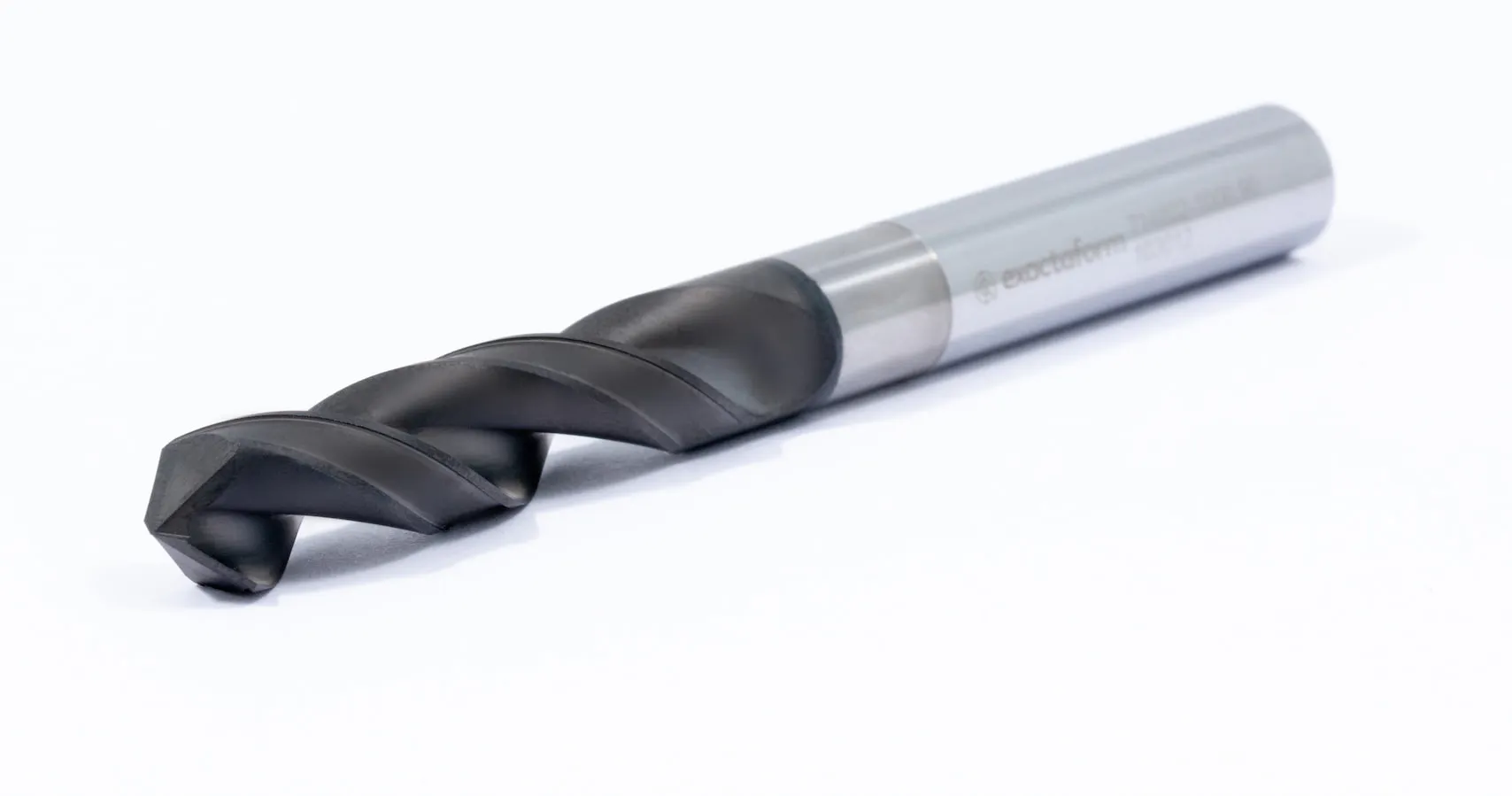
Going a bit more in depth, the 90-degree point enters and exits the material progressively.
At entry, the pointed form contacts a smaller initial area. This reduces the pressure applied to the laminate and helps control peel-up.
At the back of a through-hole, the point continues cutting as it breaks through. This helps sever the fibres rather than pushing them away and leaving them uncut.
There is a trade-off. A 90-degree point is longer than a flatter point. A blind hole will have a longer incomplete-diameter section at the bottom, while a through-hole needs enough clearance behind the component for the point to exit fully. The standard drill still has to suit the feature that has been designed.
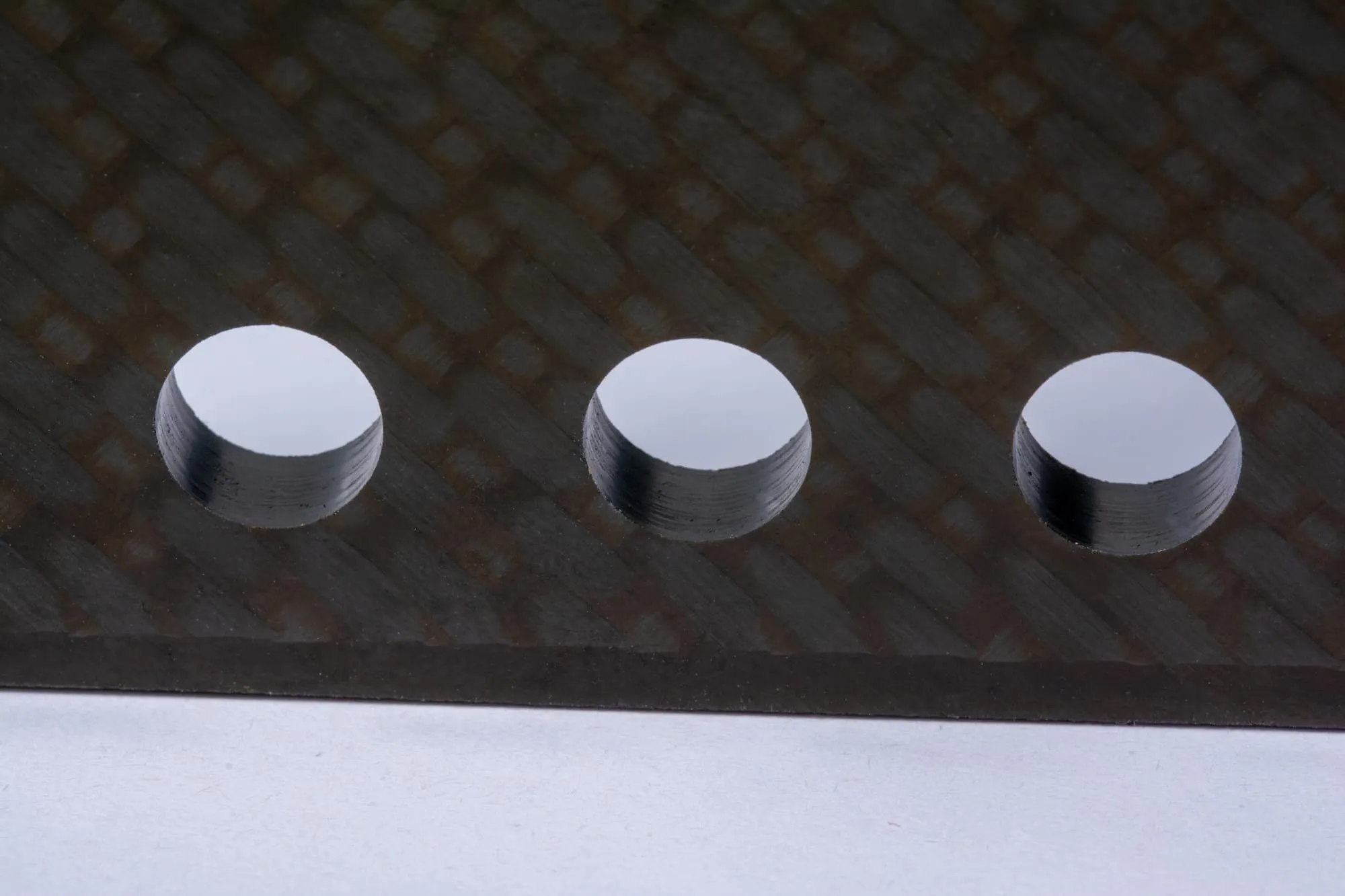
The two flutes provide the cutting action and space to remove material from the hole. The double margins provide additional guidance as the drill travels through the feature. That guidance supports hole position and dimensional consistency, provided runout, toolholding and component stability are controlled.
The geometry manages the cut. The coating protects that geometry against abrasive wear. Neither can be separated from the setup.
What materials is it designed for?
Neil: The principal materials are CFRP, graphite and aluminium-silicon alloys. They are all abrasive, but they do not create exactly the same machining problem.
- CFRP contains abrasive carbon fibres held within a polymer matrix. The drill must retain a clean edge while controlling fibre breakout and delamination.
- Graphite is also highly abrasive and produces fine machining debris that needs to be managed effectively.
- In aluminium-silicon alloys, hard silicon particles accelerate edge wear. The exact alloy and silicon content still need to be considered.
The material family tells us where to start. It does not replace a review of the grade, hole, machine, holder and required result.
How much longer will it last compared to carbide?
Neil: We should not give one general figure, as the result depends on the material, diameter, hole depth, machine, holder, cutting data and acceptance criteria. Exactaform needs to continue building application data before making a universal tool-life claim for this drill.
I'd ask how many acceptable holes does it produce in the customer’s process?
If the coated drill costs more but produces enough additional acceptable holes, reduces tool changes and makes the process more reliable, it can improve the economics. That threshold has to be calculated for the application.
This is why a trial should measure more than maximum tool life. It should establish whether the drill protects the required hole condition across more of the production run and whether that improvement reduces the overall cost per acceptable hole.
How should a manufacturer that is interested trial the drill?
Neil: Start by defining an acceptable hole. That may include entry and exit condition, delamination limits, hole diameter, position or another drawing requirement. Then compare the current drill and Aero-CARB under controlled conditions.
Record the cutting data, runout, cycle time, visible wear, hole condition and acceptable holes produced. Include tool-change time, additional inspection and rework if they affect the current process.
The trial should identify when wear begins to influence quality and establish a safe working limit before that point. It should not simply run the drill until it fails.
Use the same material, machine, holder and acceptance criteria for both tools wherever possible. If several elements are changed at once, it becomes difficult to identify whether the coating, geometry or setup produced the result.
What support does Exactaform provide?
Neil: We support the application, not simply the sale of the drill.
We can review the current process, recommend starting parameters and attend at the machine where appropriate. If a batch requires 100 holes and the drill reaches 97, the question is what controlled change might produce the final three without compromising quality.
That may mean reviewing the cutting speed, feed rate, runout or stability. It may also confirm that another tooling route is more appropriate. The aim is to leave the customer with a process that runs securely and does not need to be watched continuously.
What is your advice to a manufacturer considering Aero-CARB?
Neil: Start with the result you need, not the coating.
If conventional carbide already completes the batch with acceptable hole quality and a reliable change point, there may be no commercial reason to change.
If it loses its cutting condition too early, creates too many stoppages or places an expensive component at risk, Aero-CARB is worth evaluating.
Do not ask only whether it lasts longer. Ask whether it produces the required number of acceptable holes through a stable process and whether that improves the cost per hole.
Frequently Asked Questions
Does diamond coating prevent CFRP delamination?
Not on its own. It slows abrasive edge wear, helping the drill retain its cutting condition. Geometry, cutting data, runout, component support and the laminate also affect delamination.
Is Aero-CARB always better than conventional carbide?
No. Conventional carbide may remain more economical when it completes the required batch securely. Aero-CARB becomes relevant when additional wear resistance improves acceptable-hole output or process stability enough to justify the investment.
Can the drill be recoated?
Diamond-coated carbide is not currently economical for Exactaform to recoat. This differs from suitable PCD tooling, which may be relapped and potentially retipped.
Are trials available?
Yes. Exactaform can review the application, recommend starting conditions and support a controlled trial based on hole quality, tool life and cost per acceptable hole.