
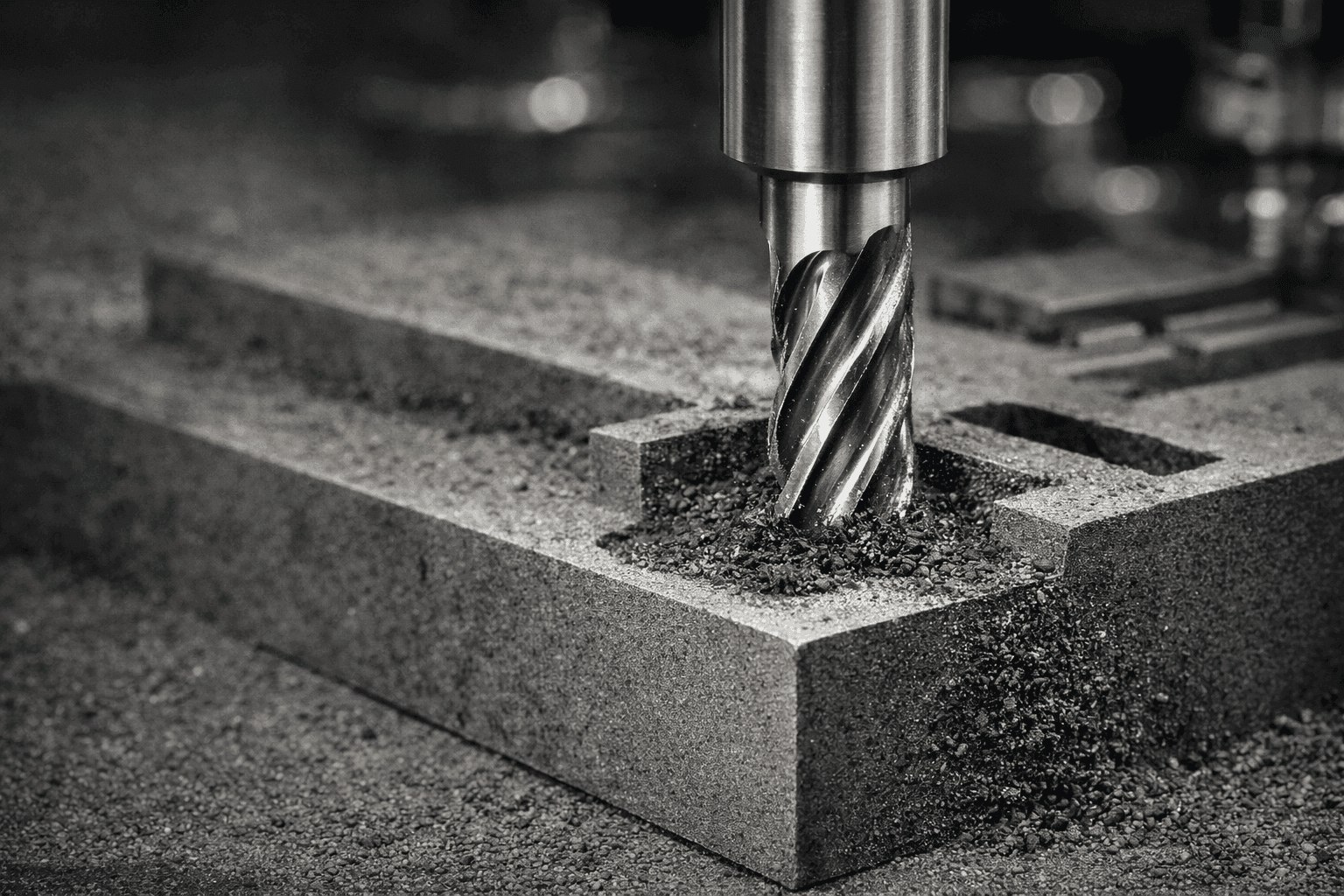
Diamond coated tools for graphite are carbide cutting tools finished with a CVD diamond coating that resists the fine, highly abrasive dust graphite produces, helping the tool hold its edge, dimensional accuracy and finish through long graphite and EDM electrode machining runs.
Graphite is widely used across advanced manufacturing because it offers excellent machinability, dimensional stability and strong performance in demanding applications such as EDM electrode production, mould and die work, aerospace components and specialist engineering. Many graphite materials are also valued for their electrical behaviour and thermal properties, including strong thermal conductivity, which is one reason they are used in high-performance manufacturing environments.
At the same time, graphite is one of the most aggressive materials for cutting edges. It wears tooling quickly, creates fine abrasive dust and places high demands on process consistency.
That is why choosing the right diamond coated tools for graphite machining is so important. When tooling is matched properly to the material and application, manufacturers can improve wear resistance, extend tool life and maintain more consistent machining quality over longer production runs.
For engineers and machinists assessing graphite machining tools, diamond coated drills and other diamond-coated solutions are often selected because they are better suited to abrasive graphite grades than many conventional alternatives, helping maintain cutting performance and dimensional accuracy across longer production runs.
Graphite may appear relatively soft compared with many metals, but it is highly abrasive during machining. The problem is not simply cutting the material. The real challenge is preserving edge condition while maintaining dimensional accuracy and surface quality.
Fine graphite particles act aggressively on the cutting edge. As wear develops, tool performance declines and the machining process becomes less stable. That can affect feature definition, dimensional consistency and finish quality. Dust control also becomes an important consideration in many graphite machining environments, especially where fine details or electrode geometry must be held accurately.
This is why standard cutting solutions often struggle in graphite work. The material may machine easily at first, but rapid edge degradation can follow. For manufacturers looking for dependable cutting tools for graphite machining, wear resistance is one of the most important performance factors.
This is one of the most common technical questions around graphite processing. The answer depends on the component geometry, finish requirement and production environment, but in many cases the best-performing options are tools designed specifically for abrasive, non-ferrous materials.
For milling operations, specialist graphite milling tools are often used to maintain accuracy and extend usable life in roughing, profiling and finishing operations. In many cases, high-speed milling strategies are also used in graphite machining because they support efficient material removal and fine feature generation when paired with the correct tool geometry and stable machine conditions.
For detailed cavity work and electrode production, the ideal tool must combine edge retention with repeatable cutting performance. In these environments, diamond coated tools for graphite are often chosen because the coating helps resist the abrasive effect of the material far more effectively than many general-purpose solutions.
Where graphite electrodes are being manufactured for EDM applications, the tooling choice becomes even more critical. Dimensional fidelity, clean geometry and consistent finish all matter, so diamond tools for graphite electrodes are especially valuable where process stability is a priority.
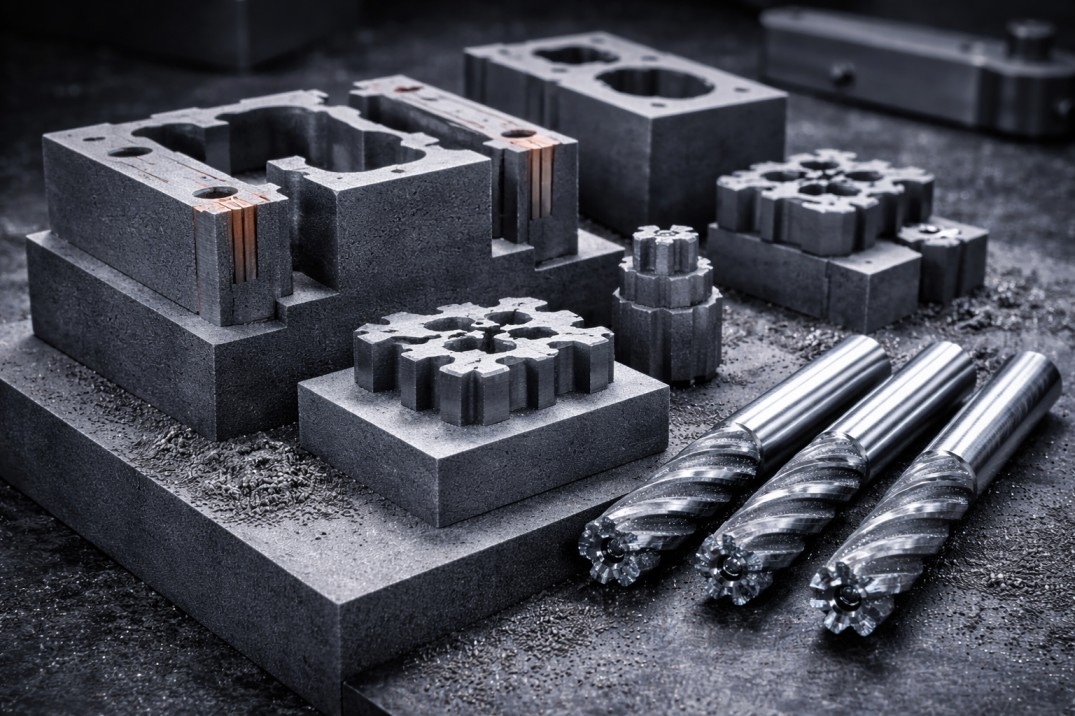
Tool wear is one of the main cost and quality issues in graphite machining. The abrasive particles within the material gradually erode the cutting edge, and once the edge begins to degrade, performance usually drops quickly.
As tool wear increases, several issues can appear. Feature quality may become less consistent. Surface finish may deteriorate. Cycle stability can fall. Dimensional accuracy may drift over longer runs. In electrode production, even small losses in accuracy can have downstream consequences.
This is the reason many manufacturers ask how to reduce tool wear when cutting graphite. The short answer is that wear cannot be removed from the process completely, but it can be managed far more effectively by choosing tooling designed for abrasive materials and by maintaining the correct cutting conditions.
Diamond coatings are highly effective in graphite machining because they help protect the cutting edge from the abrasive nature of the material. A more wear-resistant edge means the tool can hold performance for longer before deterioration begins to affect the cut.
In practical terms, this leads to a more stable machining process. The tool remains effective over a longer period. Surface quality becomes easier to maintain. Dimensional control improves because the edge does not degrade as quickly. Tool change frequency may also be reduced, which can improve process efficiency in production environments.
For manufacturers selecting diamond coated tools for graphite machining, the benefit is not just longer life in isolation. It is the combination of longer life, more stable performance and more consistent output.
Not all diamond coatings are identical. The behaviour of the tool can be influenced by factors such as coating thickness, coating surface, coating structure and how effectively the coating bonds to the substrate.
In demanding graphite applications, coating adhesion is particularly important. Poor adhesion can shorten usable tool life because the coating may fail before the cutting edge has delivered its intended value. Strong adhesion strength helps the tool maintain coating integrity under abrasive cutting conditions.
Coating structure also matters. The arrangement of diamond crystals and the use of microcrystalline diamond technologies can influence wear behaviour, edge quality and surface consistency depending on the application. In specialist tooling discussions, manufacturers may also compare CVD diamond coating and PVD diamond coating approaches when evaluating coating performance, although CVD-based solutions are more commonly associated with thick, wear-resistant diamond layers for highly abrasive substrates such as graphite.
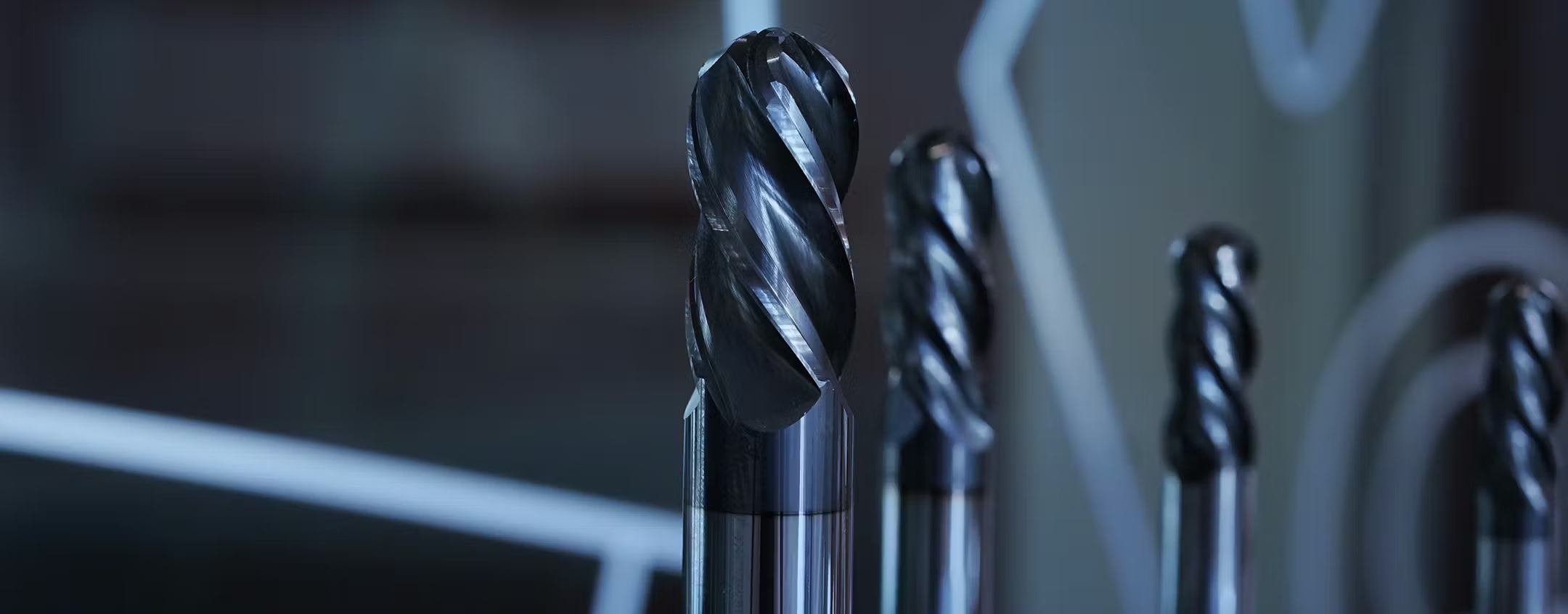
The main reason diamond coated tools for graphite machining last longer is their resistance to abrasive wear. Graphite rapidly attacks conventional cutting edges, but a diamond-coated surface provides a much stronger barrier against that effect.
As a result, the cutting edge can maintain its geometry for longer. That matters in operations where detail, repeatability and finish are important. It is particularly relevant in electrode manufacturing, where profile accuracy and consistency directly influence downstream EDM performance.
Longer tool life also supports more predictable production planning. When tools do not degrade as quickly, machining results stay more stable across batches and quality becomes easier to control.
Diamond-coated graphite milling tools offer significant advantages in precision graphite machining. In operations such as roughing, profiling and fine finishing, tool condition directly affects accuracy, edge quality and surface finish. Their ability to resist wear in abrasive graphite grades helps improve tool life, maintain dimensional stability and support more consistent milling performance in demanding applications.
Diamond coatings help graphite milling tools withstand the abrasive nature of graphite materials. This improved wear resistance allows tools to retain their cutting performance for longer, reducing the need for frequent tool changes and helping maintain productivity across longer machining cycles.
As tool wear is reduced, cutting geometry remains more consistent over time. This helps support stable dimensional accuracy, which is especially important when machining close-tolerance features, complex forms and precision details in graphite components.
In applications involving intricate shapes, narrow features or detailed profiles, tool condition has a direct impact on repeatability. Diamond-coated tools help maintain sharper cutting edges for longer, improving consistency across fine details and critical part features.
A more wear-resistant cutting edge can help produce cleaner surfaces and better overall finish quality in graphite milling. This is particularly valuable in precision applications where surface condition and feature definition are closely linked to downstream part performance.
These benefits are especially valuable where flute reach, cutting length and tool geometry must be carefully matched to the feature being machined. In such cases, diamond-coated tooling can help deliver a more reliable balance of productivity, accuracy and finish.
Graphite electrode machining is one of the clearest examples of why tooling choice matters. EDM electrodes often require precise geometry, sharp definition and stable surface quality. Even minor tool wear can affect the finished electrode and, in turn, influence downstream EDM results.
That is why diamond tools for graphite electrodes are widely valued in precision machining settings. The longer-lasting edge helps maintain detail and dimensional fidelity while reducing the rate at which performance falls away during machining.
For manufacturers producing electrodes in volume, this can bring both quality and productivity benefits. A more stable tool can reduce interruptions, support repeatability and help keep output closer to specification.
Graphite parts and electrodes often require a consistent finish as well as accurate form. Surface condition can affect performance, assembly, downstream use and visual quality depending on the application.
Diamond-coated tooling helps with finish because it keeps the cutting action more consistent for longer. A stable cutting edge is less likely to degrade into rubbing or uneven material removal, which helps the machined surface remain cleaner and more controlled.
In precision machining of graphite, that stability is often just as important as raw tool life. For many users of graphite machining tools, the goal is not only to keep the tool running longer but to preserve part quality throughout the life of the tool.
Manufacturers choose diamond coated tools for graphite machining because graphite is abrasive enough to expose weaknesses in standard tooling very quickly. A more wear-resistant solution offers better stability, more consistent finish and longer service life in production.
This makes diamond-coated tooling particularly useful where graphite parts are being machined repeatedly, where feature definition matters or where electrode quality must be kept tightly controlled. It is also valuable where process reliability matters as much as headline tool life.
For engineers asking what cutting tools are used for graphite electrodes, the answer often comes back to specialist tooling that can maintain edge performance in an abrasive environment. In many of those cases, diamond-coated solutions are a strong fit.
There is no single tool that suits every graphite application. The right selection depends on the feature size, geometry, tolerance requirement, finish expectation and the specific graphite grade being machined. Diamond coated tools are also widely used for machining composites and aluminium, where similar abrasive-wear challenges apply.
When assessing cutting tools for graphite machining, manufacturers should consider:
Graphite machining is used in a number of advanced sectors. EDM electrode production is one of the best-known applications, but graphite components also appear in aerospace, motorsport, mould and die work and specialist engineering environments.
Across these sectors, manufacturers value tools that can maintain quality in abrasive materials without frequent loss of performance. That is where graphite machining tools with diamond coatings can provide a practical advantage. They help support both precision and process reliability in environments where wear control matters.
Graphite is a demanding material because it combines good machinability with severe abrasive wear on the cutting edge. That is why the right diamond coated tools for graphite machining can make such a meaningful difference. They help improve wear resistance, maintain edge performance for longer and support better consistency in finish, accuracy and production stability.
For manufacturers machining graphite components or EDM electrodes, Exactaform can support the selection of advanced tooling solutions suited to abrasive graphite applications. If you are reviewing graphite machining tools or looking for reliable diamond tools for graphite electrodes, the Exactaform team can help you identify the right tooling approach for your graphite machining requirements.
