
Milling cutters are essential cutting tools used in machining to remove material from a workpiece during milling operations. These rotary cutting tools are mounted in a milling machine or CNC milling system and rotate at high speed to perform precision cutting. Understanding the different types of milling cutters and their applications helps manufacturers improve machining efficiency, reduce tool wear, and achieve optimal surface finish quality.
Selecting the correct milling tool ensures superior performance, extended tool life, and consistent machining accuracy across a wide range of industrial applications.
Milling cutters are rotary cutting tools used in milling machines and CNC milling operations to remove material through a controlled cutting process. These machine tools rotate at high rotational speed and engage the workpiece to perform precision cutting.
Each milling cutter contains multiple cutting edges or flutes, allowing efficient material removal while maintaining cutting stability and precision.
Common milling cutter materials include:
There are several types of milling cutters designed for specific milling operations, cutting widths, and machining applications.
End mills are among the most versatile types of milling cutters used in CNC milling and general machining.
Applications:
Roughing end mills are a specialised type of end mill designed for rapid material removal. They reduce cutting forces and improve chip evacuation during heavy-duty machining. Diamond coated end mills and solid carbide milling cutters are commonly used for machining abrasive materials such as composites and aluminum alloy.
Face mills are designed specifically for machining flat surfaces using a face milling process. A face mill is mounted on a milling machine and rotates to perform face milling, removing material across a wide surface area.
Applications:
Face cutters used in face milling often contain indexable inserts, improving cutting efficiency and reducing tool wear. Face milling is commonly used in CNC milling applications requiring high precision and productivity.
Ball nose milling cutters have a rounded cutting tip, allowing them to machine complex 3D shapes and curved surfaces.
Applications:
These cutters provide excellent surface finish quality in precision machining applications.
Slot milling cutters are designed for machining slots, grooves, and channels.
Applications:
These cutters provide precise cutting width and controlled material removal.
Roughing milling cutters, including roughing end mills, are designed for heavy-duty machining and rapid material removal.
Applications:
These cutters improve machining efficiency while reducing tool wear.
Thread milling cutters are used to produce threads in precision components.
Applications:
Thread milling provides superior accuracy and flexibility compared to traditional threading methods.
Polycrystalline Diamond milling cutters use solid diamond cutting edges for exceptional durability.
Applications:
PCD cutters provide excellent wear resistance and extended tool life.
Diamond coated milling cutters use industrial diamond particles bonded to solid carbide milling cutters.
Applications:
These cutters provide superior wear resistance and extended tool life in demanding machining environments.
Indexable milling cutters use replaceable cutting inserts mounted in face cutters or milling cutter bodies.
Applications:
Indexable inserts allow easy replacement, reducing tooling costs.
Selecting the correct milling cutter depends on several factors.

Different materials require specific cutting tools. Diamond coated cutters are ideal for abrasive materials, while carbide cutters are suitable for steel and titanium.
Cutting width and cutting depth affect material removal rate and machining efficiency.
Solid carbide milling cutters provide superior durability and wear resistance.
Different milling operations require specific cutter types for optimal performance.
Modern CNC milling machines rely on specialised milling cutters designed for automated machining processes.
CNC milling cutters provide:
Solid carbide milling cutters and diamond coated cutters are commonly used in CNC milling operations.
Using the correct milling tool improves:
Improper tool selection increases tool wear and reduces machining performance.
Milling cutters are widely used across industrial manufacturing sectors.
Used in the aerospace industry for machining aluminum alloy, composite materials, and aerospace components.
Used in the automotive industry for machining engine components and structural parts.
Used for manufacturing high-precision components.
Diamond coated milling cutters provide superior performance in abrasive machining applications.
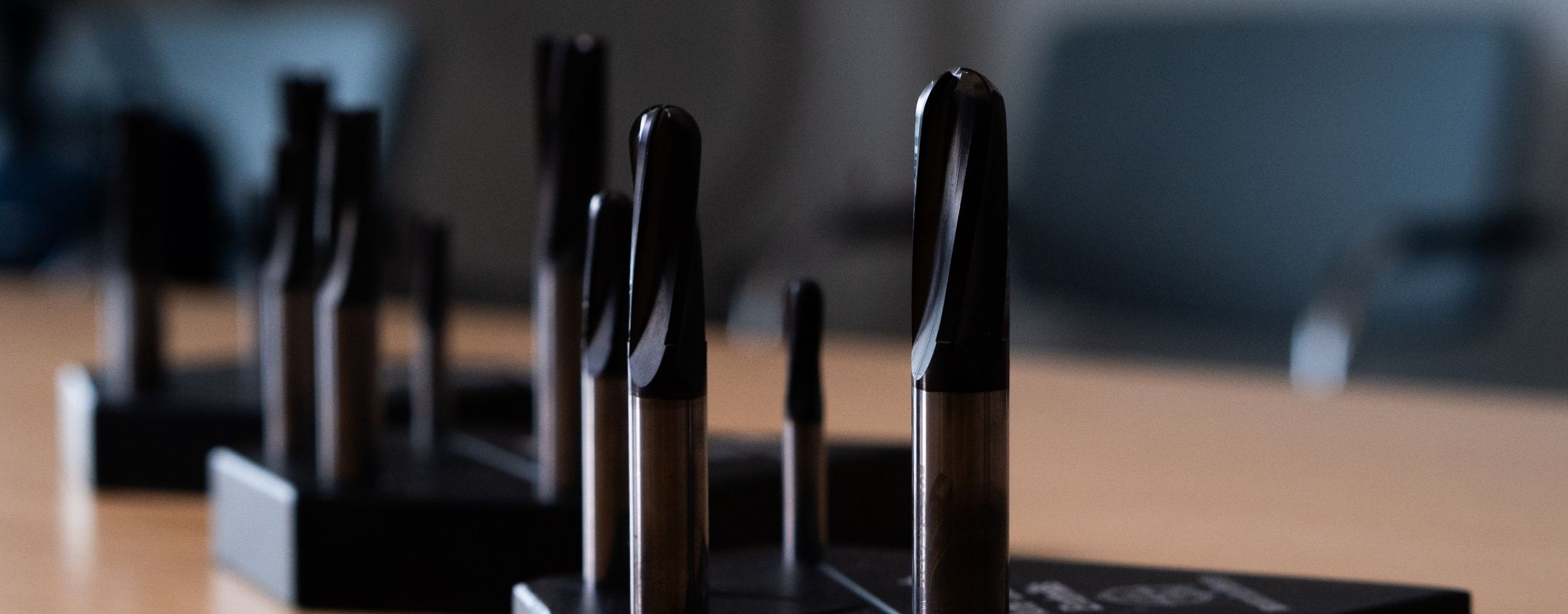
Face milling and end milling are two of the most common milling processes used in machining operations. While both remove material using rotating cutting tools, they are designed for different purposes and applications.
Face milling uses face mills or face cutters to machine large, flat surfaces. The cutting edges are positioned on the face of the tool, allowing it to create smooth, level finishes across broad areas. This method is typically used for surfacing operations and preparing workpieces for further machining.
End milling, on the other hand, uses end mills to machine slots, contours, pockets, and detailed features. The cutting edges are located on both the end and the sides of the tool, enabling it to cut in multiple directions. This makes end milling ideal for producing complex shapes and precision features.
Both processes require specialised milling cutters selected according to material type, surface finish requirements, and machining objectives to achieve optimal results.
Understanding the different types of milling cutters is essential for achieving optimal machining performance. Milling cutters such as end mills, face mills, roughing end mills, and solid carbide milling cutters provide specialised solutions for different machining applications.
Modern CNC milling operations rely on advanced milling tools to improve efficiency, reduce tool wear, and ensure precision machining performance.
Exactaform provides advanced milling cutters, diamond coated tools, and precision machine tools engineered to deliver superior machining performance across demanding industrial applications.

Frequently Asked Questions