

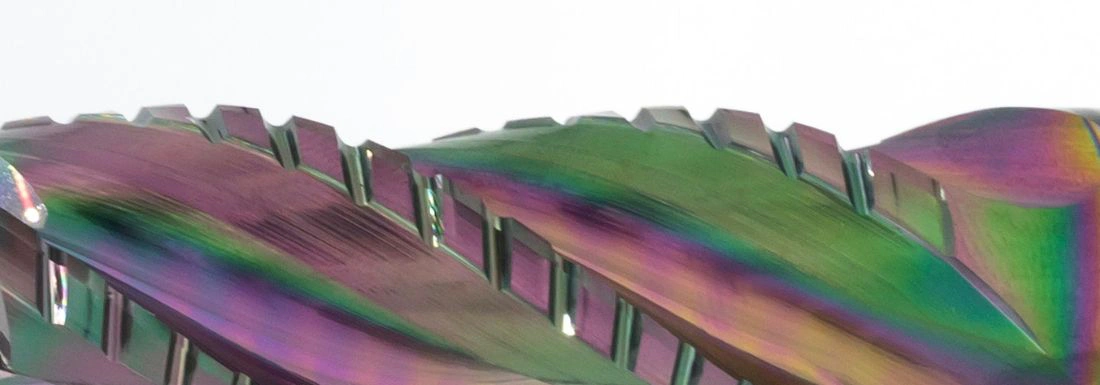
Carbide tooling costs are becoming harder to predict because the price of tungsten carbide is now driven by a raw-material market that moves faster than manufacturers can plan around.
For decades, carbide tooling costs were relatively stable. Naturally, prices increased over time, but usually through predictable annual or inflationary rises that manufacturers and suppliers could plan around.
Since 2025, that stability changed and instead of manageable, forecastable increases, the market saw the steepest cost movement to date. This has put pressure on manufacturing supply chains globally, creating increases that are difficult to absorb in the usual way. Manufacturers have been left to bear the cost, but for how long? At some point it will trickle through the supply chain, and everyday users will need to pick up the cost of this volatility in a usually calm market.
How Tungsten Is Related to Carbide Tooling
When manufacturers talk about carbide cutting tools, they are usually referring to tungsten carbide. Tungsten is a major reason carbide performs the way it does, giving the tool the hardness, wear resistance and heat performance needed for demanding drilling, reaming, milling and specialist tooling applications.
Tungsten supply, in its raw material form, has become highly concentrated over the past thirty or forty years. While tungsten mines exist in different parts of the world, global supply and processing capacity are currently heavily influenced by China. As a result, when export controls, restricted availability or price movement affect the tungsten market, that pressure is felt early by carbide producers and tooling manufacturers, before it reaches customers more gradually through pricing, availability or lead-time changes.
For 2026, the sharp rise in tungsten prices does not mean carbide tools will suddenly become unavailable or unaffordable overnight, as supply chains rarely move that quickly. What it does mean is that the raw material carbide tooling depends on is becoming more exposed to market pressure, and the tungsten carbide price harder to forecast.
How the Rising Tungsten Carbide Price Shows Up Across Manufacturing Sectors
Manufacturers can manage higher costs if they are predictable. That is true for aerospace, automotive, motorsport and wider high-volume manufacturing, and it is also true for tooling manufacturers.
As one of the earliest points in the supply chain, we feel raw-material pressure before it reaches our customer. Production teams have less confidence around repeat orders. Procurement teams have less certainty when planning spend. Operations teams have less room to absorb urgent changes. That is especially difficult where tools are linked to repeat work, high-value components, approved processes or time-sensitive jobs.
- In automotive, the pressure may show up in cost-per-part and repeatability.
- In aerospace, it may show up in process control, qualification confidence and long-running programme planning.
- In motorsport, it may show up in urgent turnaround, fast iteration and limited tolerance for delay.
Different industries feel the pressure differently, but the core issue is the same: critical tooling is becoming harder to plan around.
What Manufacturers Can Do Next
The most practical response is not panic buying or changing tooling without evidence. We understand why some companies look at those options, but they can create more cost if they are not backed by application data.
Identifying where carbide exposure is already creating pressure is a much smarter approach. That may include repeat tools with high annual usage, long-lead-time tools, applications with frequent tool changes, or operations where tool wear affects quality control and inspection confidence. For a more detailed look at this process, read our guide on how to reduce carbide exposure without increasing process risk.
From there, manufacturers can review whether the current tooling solution is still the best fit. In some cases the answer is process optimisation. In others, it may be a regrind, retip or refurbishment programme, where the tool design and condition allow for it, supported by a more predictive maintenance approach to planning tool changes. For abrasive or high-repeatability production runs, PCD or diamond-coated tooling may also be the right tool material to review. Stock planning and inventory management become more important too, particularly for critical repeat tools where availability matters as much as price.
A More Strategic View of Cutting Tools
Ultimately, carbide tooling costs are becoming harder to predict as the material market changes. The way to combat it is to understand which tools are optimised to their full potential, which applications are already under pressure, and where better tooling decisions could reduce cost, and protect cost savings, without disrupting a process that already works. As the tungsten carbide price stays volatile, that strategic view is what keeps production stable.
So the real question is simple: how much value is your current process actually giving you?