

Key insights
A 4-Flute
80%
70%
The environment
To demonstrate how we evaluate tooling effectiveness, Exactaform ran a tooling trial to identify the best-performing tool based on cycle time, unit price, and tool life all pull in different directions. A drill that wins on one metric can easily lose on the others once the full picture is accounted for.
Target
1,000 holes
Coolant
Ecocool SLF 5% flood
Material
CFRP BML (UD)
Machine
Cincinnati CFV5-Si axis VMC
The tools
Each drill was tested using the same material, machine, Ecocool SLF 5% flood coolant and 1,000-hole target.
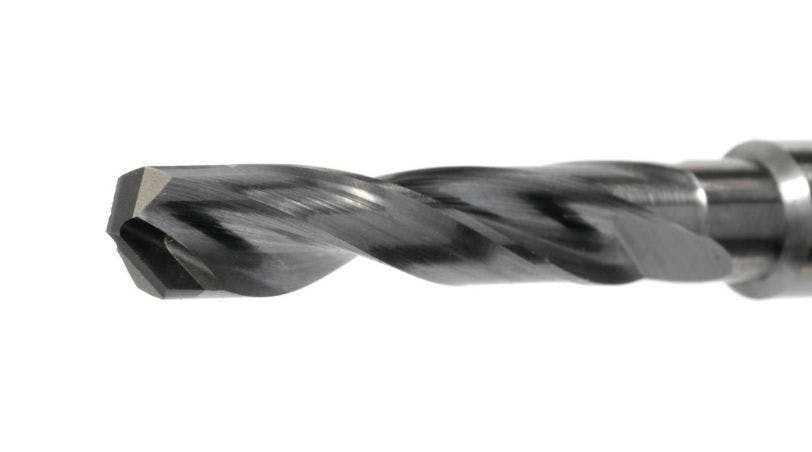
A: Standard 2FL Drill
Conventional 2-flute twist drill used as the baseline
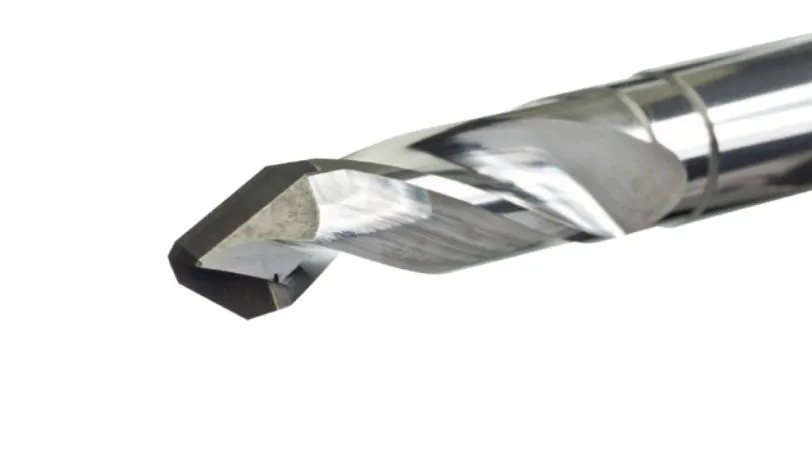
B: 8 Facet Drill
Multi-facet point geometry

C: 4FL Coated Drill
4-flute drill with wear-resistant coating

D: 4FL Carbon Drill
4-flute drill with wear-resistant coating
The Results
Drill D is the clear winner on every metric that matters. It machined all 1,000 holes nearly five times faster than the standard drill - 20 minutes versus 95 - and did it with a single tool, with no mid-run changeovers.
Machine time for 1,000 holes
Lower is better.
Drill D completed the run almost five times faster than the standard 2-flute drill.
Total tooling cost
Lower is better.
Drill D reduced total tooling cost by nearly 70% versus the standard drill.
Tools needed to complete the run
That combination of speed and durability cut the total tooling cost for the job by almost 70% compared to the standard drill, and by more than 85% compared to Drill C.
What the Numbers Show
Exactaform's 4-Flute Carbon Drill (Drill D) is the clear winner on every metric. It machined all 1,000 holes nearly five times faster than the standard drill with 20 minutes versus the 95 minutes observed from the 2 Flute Drill (Drill A) from our standard range. With a single tool, with no mid-run changeovers, the total tooling cost for the job by almost 70% compared to the standard drill, and by more than 85% compared to Drill C.
Speed alone doesn't tell the whole story.
The 4-Flute Diamond Coated Drill (Drill C) performed well on cycle time alone, however, needed four tools to complete the same 1,000-hole run in the set environment. That resulted in giving us the highest total cost of any drill tested, despite the second shortest individual cutting time of the comparisons. A faster cut that consumes more tooling can end up the most expensive option overall and with no experts on your cutting tool team this can easily be missed.
Geometry improvements alone aren't enough.
The 8 Facet Drill's (Drill B) more advanced 8-facet point cut, machined close to 30% quicker versus the standard drill, but its higher unit cost and unchanged tool life meant it ended up marginally more expensive overall, per hole, than the baseline it was meant to improve on.

“At Exactaform, we don’t look at a cutter in isolation. We look at the material, the machine set-up, the cutting conditions and the wider impact on production, including tool changes, downtime and cost per hole.
That depth of review helps us recommend the option that gives you the strongest overall result. With decades of manufacturing experience behind us, and engineers and designers who understand tooling at application level, our aim is to give you the confidence that you are making the right tooling decision for their process.”
Ready to work with us?
Get in touch with our expert aerospace team today.