

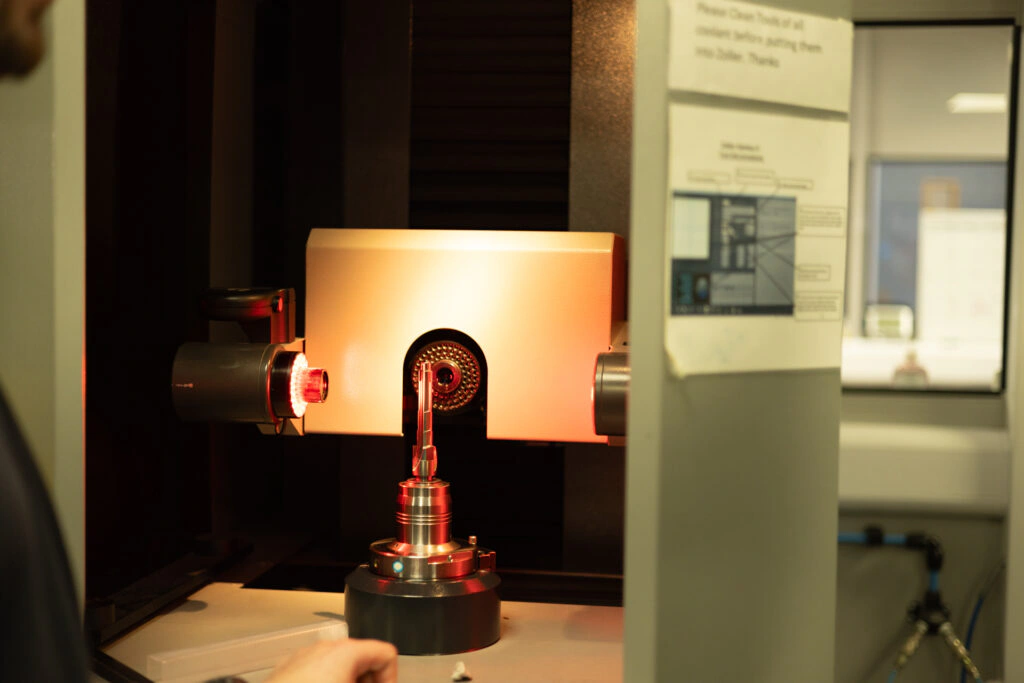
Tungsten carbide remains the backbone of precision machining, prized for its exceptional hardness, thermal stability, and resistance to wear. Carbide cutting tools, a composition of tungsten carbide, other alloying elements and a cobalt binder enables the high-speed machining of steels, titanium, stainless alloys, and advanced composites - materials that define modern aerospace manufacturing.
But that foundation is becoming increasingly volatile.
Aerospace manufacturers are now bracing for a sharp escalation in tooling costs as tungsten markets tighten. Prices have surged more than fivefold since early last year, and are up a further 110% since the beginning of 2026, driven by constrained supply, Chinese export controls, sustained industrial demand, and escalating geopolitical tensions, including the ongoing Middle East conflict.
While tungsten pricing directly affects the cost of tungsten carbide powder - a critical input in the production of high-performance cutting tools - the greater risk for aerospace lies in uncertainty. The sector depends on long-term planning and precise forecasting. When raw material markets become unstable, cost modelling quickly breaks down, with knock-on effects for tooling strategies, production timelines, and overall programme efficiency.
Rising Carbide Costs and Their Impact
Many Tier 1 suppliers operate under fixed-term contracts lasting one to three years, providing only temporary insulation from price volatility. As a result, the full impact of rising carbide costs is not yet fully visible across the sector. As these agreements approach renewal, the pressure will intensify, while downstream suppliers, including Tier 2 and Tier 3 manufacturers and MROs, are already contending with longer lead times and tightening availability.
Smaller suppliers are particularly exposed. Tier 2 and Tier 3 manufacturers, along with maintenance organisations, typically purchase lower volumes of tooling, limiting their negotiating leverage and accelerating their exposure to price increases. In practice, this means cost pressure enters the supply chain at the lower tiers and works its way upward.
Even modest increases in tooling costs can have an outsized effect. Aircraft manufacturing economics are defined early in the design phase and continuously refined throughout the programme lifecycle, with detailed cost models spanning materials, tooling, assembly, and logistics. When any input shifts, including cutting tools, those changes propagate through the entire programme.
As an example, a 5% increase in carbide costs for a Tier 3 supplier can lead to schedule adjustments or material reallocations at OEMs and Tier 1 suppliers, illustrating how volatility at the raw material level quickly propagates throughout the aerospace production ecosystem.
For organisations still operating under fixed-price tooling agreements, the impact may be delayed but not avoided. As contracts expire, pricing will need to realign with current tungsten markets. If upward pressure persists, the next cycle of tooling agreements could see double-digit increases, reshaping cost forecasts for future aircraft programmes.
Why Change is Hard, and Costly, in Aerospace
In a highly regulated industry such as aerospace, flexibility exists, but it is tightly constrained. Switching between suppliers using like-for-like tooling is typically manageable, requiring additional quality checks to verify performance but rarely causing major disruption. However, any shift in technology, whether material, coating, or tool geometry, introduces a far greater burden.
Aerospace manufacturing operates under stringent quality and certification requirements. Even minor changes can trigger machining trials, process validation, and formal engineering approval. These processes are not trivial. Requalification can take months, and most production and engineering teams are already operating at or near capacity.
As a result, change is not driven by opportunity but by necessity. Manufacturers will only pursue it when the cost or operational risk of maintaining the current solution outweighs the time and resource burden of switching.
This structural rigidity limits the industry’s ability to respond quickly to material price shocks, forcing aerospace manufacturers to manage tungsten volatility tactically rather than avoid it altogether.
Strategic Responses to Manage Volatility
For most aerospace manufacturers, the first line of defence against rising carbide costs is internal optimisation.
At Exactaform, we work with aerospace customers, to maximise machine utilisation, extend tool life through process improvements, and reassess tooling strategies to improve efficiency per cut. The objective is straightforward: reduce carbide consumption while maintaining or increasing output per tool, allowing manufacturers to absorb part of the price impact rather than passing it immediately through the supply chain.
For instance, adjusting cutting speeds and feed rates by even small margins is not uncommon to be rewarded with extensions in tool life by 15–20%, reduce carbide consumption, and lower per-part costs. Similarly, reviewing coolant strategies or optimising tool path sequences can unlock incremental savings without requiring additional tooling investment.
Sustainability initiatives can also deliver measurable economic benefits. Regrinding and resharpening cutting tools, once considered primarily an environmental practice, now extend tool life and lower carbide consumption, demonstrating that operational efficiency and material stewardship go hand in hand.
In some applications, manufacturers are also exploring alternatives such as PCD tooling to reduce reliance on carbide altogether where process conditions allow.
However, internal optimisation alone is rarely sufficient to offset sustained market volatility. There is an increasing need for closer collaboration between suppliers and aerospace manufacturers. These partnerships illustrate a broader industry trend. Manufacturers are leveraging supplier expertise to mitigate material volatility, maintain production efficiency, and protect programme cost forecasts.
Supply chain strategy is also evolving in response to market pressures. Leading manufacturers are securing longer-term agreements and diversifying suppliers to reduce dependency on single sources of tungsten. Forward-looking inventory management is increasingly being used to provide a buffer against supply disruption, balancing working capital considerations against the risk of tooling shortages or price spikes.
Ultimately, the industry is being pushed toward a more proactive and strategic approach to tooling. Cutting tools are no longer just consumables, they are critical inputs that require careful planning, risk management, and close collaboration with suppliers to ensure continuity, efficiency, and cost predictability in a volatile market.
Immediate Actions to Manage Tungsten Volatility
Transparency and collaboration are critical, especially in a market as tightly regulated and process-driven as aerospace. Many manufacturers are already aware that carbide supply is becoming more volatile, and the first signal they usually receive from suppliers relates to delivery performance rather than pricing. Delays in delivery can disrupt production planning, particularly for Tier 2 and Tier 3 manufacturers, where smaller volumes and tighter schedules leave less room to absorb supply shocks. Pricing adjustments typically follow after the operational impact becomes apparent, meaning manufacturers often face scheduling and capacity issues before cost impacts hit their budgets.
The most important step in navigating this volatility is open communication. Manufacturers should work closely with tooling specialists who understand machining processes and can help optimise production. Rather than focusing solely on tool price, it is essential to evaluate the entire process including machining strategy, tool life, coatings, and potential alternative technologies. Suppliers with strong application engineering expertise can often identify improvements that reduce overall machining cost, even when raw material prices are rising.
For example, a manufacturer looking to reduce tooling consumption may uncover through tooling consultation a substantial reduction in tooling costs, whether that's by optimising tooling geometry, tool path strategies, or looking into the benefits of advanced materials such as PCD and diamond coatings.
Proactive dialogue enables customers to plan around potential disruptions, adjust production schedules, and explore contingency options before volatility translates into operational delays.
In practice, the aerospace supply chain rewards suppliers who act as partners rather than vendors. Those who communicate clearly, share actionable insights, and offer practical solutions not only help mitigate immediate disruption but also build the trust and collaboration that underpin long-term success in a volatile material market.
Future-Proofing: Building Resilience Against Tungsten Volatility
Aerospace teams need to engineer predictability wherever possible, turning raw material volatility into a manageable factor rather than a constant risk. Future-proofing involves more than just optimising individual processes, it requires a holistic approach. This includes evaluating efficiency across the tool lifecycle, integrating advanced machining strategies, and collaborating with suppliers who provide insight and technical expertise, not just products.
Suppliers with strong application engineering capabilities can help manufacturers identify ways to extend tool life, optimise cutting parameters, explore alternative coatings or materials, and even adopt emerging technologies, ensuring that processes remain robust despite fluctuations in tungsten pricing.
Advanced coatings, cermet inserts, and hybrid machining strategies are helping manufacturers reduce dependence on tungsten while maintaining precision. Digital process simulations and predictive maintenance tools further allow teams to optimise machining before raw material constraints translate into cost or schedule impacts.
In practice, this is where suppliers move from providing tools to supporting process performance.
The strongest position for any aerospace manufacturer or tooling supplier is to become a value-added, consultative partner embedded in the customer’s operations. Companies that focus solely on pricing or delivery risk being undercut, while those who improve total process outcomes and help their customers manage cost and efficiency become indispensable over the long term.
The Evolving Carbide Market: Preparing for the Next Wave
Raw material volatility, particularly in tungsten, will remain a fact of aerospace manufacturing. While markets adjust over time, short-term instability is inevitable, and supply pressures will continue to influence pricing and delivery. The most effective response is to focus on what can be controlled - improving efficiency, strengthening supplier partnerships, and maximising value from every tool and process.
Recycling tungsten, diversifying global supply sources, and exploring alternative materials are strategies suppliers and manufacturers are increasingly deploying to reduce exposure to geopolitical and market volatility. While these measures do not eliminate short-term fluctuations, they provide a foundation for long-term resilience.
As carbide continues to underpin precision machining, the focus is shifting from managing tool cost to managing process performance. Those who embed proactive tooling strategies and technical collaboration into their operations will not only navigate the current turbulence but position themselves to thrive in an evolving market.