
 By Maria Simeonova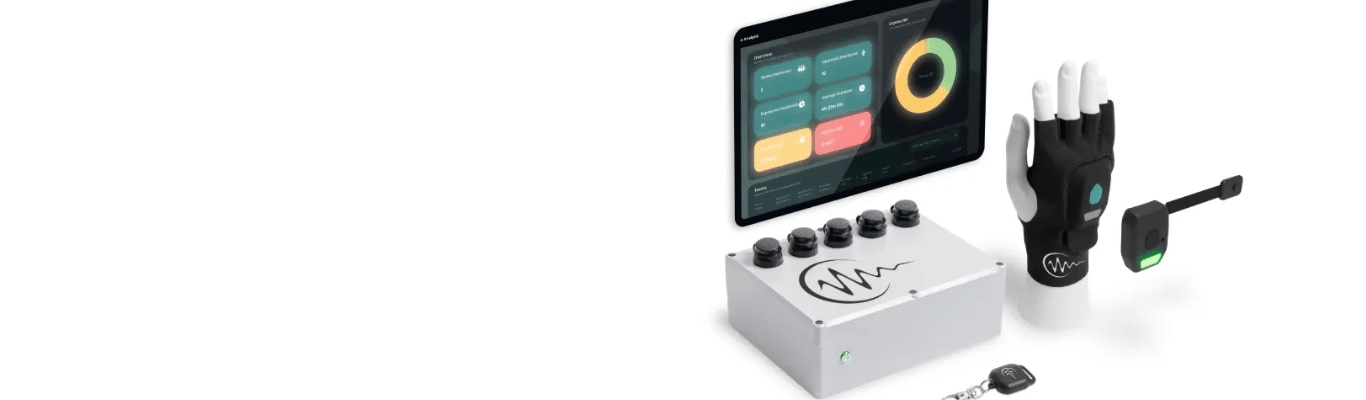
For employers managing vibration risks, one question comes up repeatedly: are manual HAV calculations enough, or is automated monitoring now essential?
As regulatory scrutiny increases and awareness of long-term health impacts grows, this comparison sits at the heart of effective HAV risk management. This article explains the difference between manual calculation methods and automated monitoring systems, why accuracy matters for compliance, and how modern sensor technology, such as HAV Sentry, is reshaping HAVS exposure monitoring.
Hand-arm vibration exposure builds up over time across different tools and work activities. If exposure is underestimated, employees may unknowingly exceed the exposure limit value, increasing the risk of:
Once these injuries develop, they are often irreversible. That is why accurate exposure measurement is central to HAVS prevention, not just regulatory compliance.
Manual HAV calculations are still widely used and typically involve:
These calculations are intended to demonstrate compliance with the Control of Vibration at Work Regulations 2005 (often called the Vibration Regulations).
While familiar, manual approaches have significant drawbacks:
The result is often incomplete or misleading measurement results, leaving employers exposed to compliance and health risks.
Automated monitoring systems replace estimates with real data. Using modern sensor technology, these systems continuously measure vibration at the point of use.
A typical automated monitoring system includes:
Instead of calculating vibration doses after the fact, exposure is tracked as work happens.
Under the Control of Vibration at Work Regulations 2005, employers must:
Manual calculations may meet minimum requirements in simple environments. However, in complex operations involving multiple tools, shifts, and locations, automated monitoring provides a clearer, defensible compliance position.
This is where Exactaform supports employers through its HAV Sentry solution.
Exactaform’s approach recognises that vibration risk cannot be effectively managed through estimates alone. HAV Sentry is designed to support:
By automating measurement and reporting, employers gain visibility into real employee exposure, something manual calculations struggle to deliver.
Accurate exposure data strengthens occupational health processes, including:
Rather than applying blanket assumptions, decisions are informed by actual exposure history.
To suit different environments, automated vibration monitoring solutions are often supplied as:
This makes automated monitoring practical even in demanding operational settings.
Manual HAV calculations may still be appropriate for low-risk, limited-use scenarios. However, where vibration risks are significant, variable, or cumulative, automated monitoring systems offer clear advantages.
They allow employers to:
The comparison between manual HAV calculations and automated monitoring systems highlights a wider shift in occupational safety, from assumption-based compliance to evidence-based prevention.
For employers serious about protecting their workforce and meeting regulatory expectations, automated HAVS exposure monitoring, supported by modern sensor technology and solutions like HAV Sentry, represents a safer, more reliable way forward.
Our engineers and experts produce blogs, guides and case studies that help answer the biggest tooling questions.


