

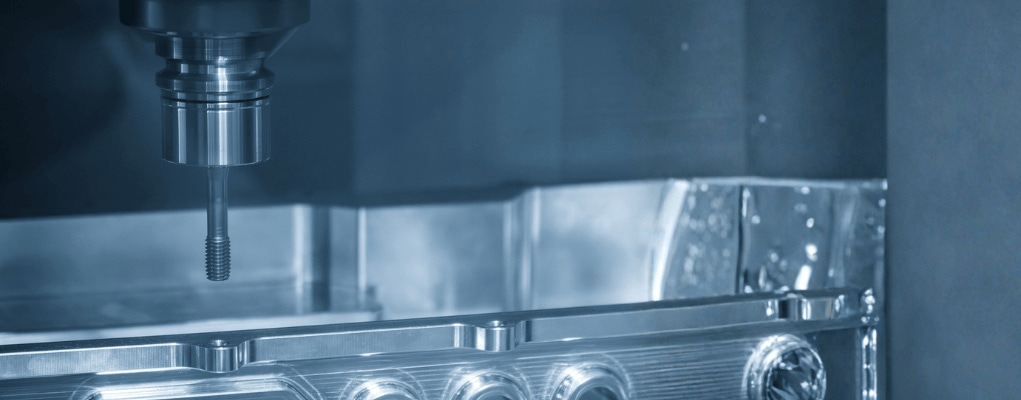
Industries using carbide cutting tools span some of the most demanding manufacturing environments in the world. Wherever materials are hard, tolerances are tight, or production speeds are high, carbide tooling plays a critical role in achieving reliable, repeatable results.
This article explores how different industries apply carbide tools in real-world manufacturing processes, and why tungsten carbide has become the material of choice for high-performance metal cutting.
Supplied across multiple sectors by Exactaform, carbide cutting tools support manufacturers looking to improve tool life, surface finish, and overall production efficiency. Exactaform supplies the full WIDIA carbide tools range in the UK, offering faster technical response, practical application support, and dependable availability, all from a UK-based engineering partner.
Why Carbide Cutting Tools Are Used Across Industries
Carbide tooling is typically manufactured from tungsten carbide, a material known for exceptional hardness, wear resistance, and heat resistance. Compared with high-speed steel, carbide maintains sharp cutting edges at higher temperatures, allowing greater cutting speeds and more consistent performance.
Modern solid carbide tools, carbide inserts, and carbide-tipped tools are designed to deliver high-speed performance while maintaining accuracy in demanding CNC machining environments. This makes carbide suitable across a wide range of industries and applications.
Aerospace Industry
The aerospace industry is one of the most demanding users of carbide cutting tools. Components often require extreme accuracy, high-quality surface finish, and consistent results across complex geometries.
Carbide tooling is widely used for:
- Precision machining of structural and engine components
- High-speed machining of difficult alloys
- Maintaining tight tolerances across long production runs
Carbide end mills, high-precision carbide tools, and specialised milling cutters are preferred due to their stability, edge retention, and ability to withstand high cutting temperatures without deformation.
Automotive Industry
In the automotive industry, carbide tooling supports both high-volume production and precision engineering requirements. Manufacturers rely on carbide to balance speed, accuracy, and cost efficiency.
Common applications include:
- CNC machining of engine blocks and drivetrain components
- Machining of cast iron and hardened steels
- Use of carbide drills, reamers, and end mills for repeatable hole quality
Carbide’s long tool life reduces tool changes, supporting production efficiency and consistent output on automated lines.
Precision Engineering and CNC Machining
Precision engineering environments rely heavily on carbide tooling to achieve tight tolerances and consistently high-quality surface finishes. In CNC machining, carbide tools enable higher spindle speeds and improved cutting stability, supporting both productivity and accuracy across complex operations.
Solid carbide tooling is commonly used for high-precision milling operations, finishing passes that demand superior surface quality, and multi-axis CNC machining where tool rigidity is critical. Compared to high-speed steel, carbide delivers stronger high-speed performance with reduced vibration and improved dimensional accuracy.
Heavy Engineering and Industrial Manufacturing
Heavy engineering and general industrial manufacturing place significant mechanical and thermal loads on cutting tools. Large components, abrasive materials, and extended cutting cycles require tooling with exceptional durability and wear resistance.
Carbide tools are widely used in heavy metal cutting operations, the machining of stainless steels and alloy steels, and both roughing and finishing applications using carbide inserts and milling cutters. The use of carbide tips and replaceable inserts allows worn cutting edges to be changed efficiently, reducing downtime while maintaining consistent cutting performance.
Custom Manufacturing and Special Applications
Many manufacturing environments require custom tooling to match specific part geometries, materials, or process constraints. Carbide is particularly well suited to bespoke tooling solutions due to its versatility, strength, and predictable performance characteristics.
Custom carbide tooling may include special-profile end mills, application-specific carbide drills and reamers, and solid carbide tools designed for unique manufacturing processes. These solutions support high-speed machining while delivering reliable tool life, repeatable results, and consistent production outcomes.
Why Carbide Outperforms Alternative Tooling Materials
Across industries, carbide cutting tools are chosen because they offer:
- Longer tool life through superior wear resistance
- Higher cutting speeds without loss of accuracy
- Stable cutting edges for consistent surface finish
- Reduced downtime and fewer tool changes
While high-speed steel still has a place in lower-speed or intermittent applications, carbide is the preferred choice for industries focused on precision, productivity, and long-term cost control. The industries using carbide cutting tools are those where performance cannot be compromised. From aerospace and automotive manufacturing to precision engineering and heavy industry, carbide tooling enables faster production, better quality, and greater reliability.
By aligning tooling selection with material demands and production goals, manufacturers can fully realise the benefits of solid carbide tooling and high-precision carbide tools.
For further insight into available options and sector-specific solutions, Exactaform supports manufacturers through its Carbide Cutting Tools range and Industry Applications Hub, helping teams identify where carbide delivers the greatest impact.