
 By Maria Simeonova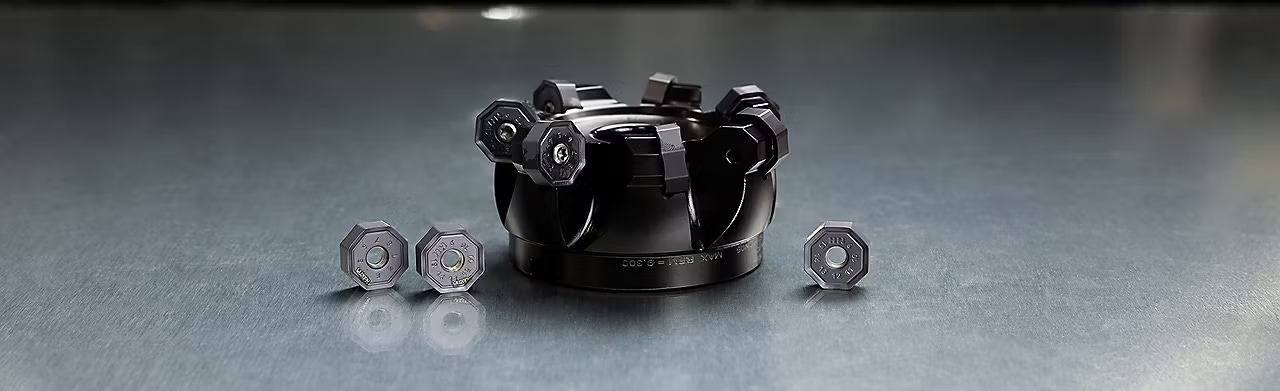
Carbide tooling for precision manufacturing plays a critical role in industries where tight tolerances, repeatability, and surface finish are non-negotiable. As manufacturing processes become more advanced and production targets more demanding, standard tooling and high-speed steel are often no longer sufficient. In these environments, proven solutions such as WIDIA carbide tools are widely used to deliver the stability and performance required for consistent results.
This article explains how carbide cutting tools support high-precision machining, why they outperform alternative materials, and how premium carbide solutions help manufacturers achieve consistent results in demanding environments.
Precision manufacturing relies on accuracy at every stage of the machining process. Small variations in tool wear, cutting edges, or heat buildup can lead to dimensional drift, poor surface finish, and increased scrap rates.
In sectors such as the aerospace industry and automotive industry, components often require micron-level tolerances across large production runs. This makes tooling stability, wear resistance, and predictable performance essential.
Carbide tooling is specifically engineered to meet these requirements.
Carbide tools are manufactured from tungsten carbide, a composite material made by sintering hard tungsten carbide particles with a metallic binder. The resulting carbide material offers a unique combination of hardness, toughness, and thermal stability.
Compared with high-speed steel and other standard tooling materials, carbide delivers:
These properties make solid tungsten carbide tooling ideal for precision and high-speed applications.
In precision machining, maintaining consistent cutting edges is critical. Carbide tools retain their geometry far longer than HSS tools, even during aggressive high-speed machining.
Solid carbide cutting tools, including end mills, face mills, and milling tools, provide:
This stability allows manufacturers to maintain tight tolerances over extended production cycles.
One of the most significant advantages of carbide tooling in precision manufacturing is extended tool life. High wear resistance reduces the likelihood of unplanned tool changes and frequent replacements, helping to minimise variability between parts across a production run.
By reducing the number of tool changes required, manufacturers can maintain more consistent CNC offsets, improving repeatability and reducing downtime. Over time, this leads to lower maintenance costs and supports a more predictable, efficient workflow.
Carbide tooling performs exceptionally well across a wide range of materials commonly used in precision manufacturing. Its strength and wear resistance allow it to maintain cutting performance even under demanding conditions, making it a reliable choice across diverse applications.
In stainless steel machining, carbide tools retain sharp cutting edges at higher cutting speeds, helping to prevent rapid wear and heat-related degradation. When machining harder alloys or complex components, solid carbide tooling enables stable, precise cutting without premature failure, supporting both accuracy and tool longevity.
Carbide is also widely used in operations that demand high levels of precision, including drilling applications requiring tight positional accuracy, milling complex geometries, and performing high-precision finishing passes where surface quality and consistency are critical.
Modern carbide tooling benefits from advanced tool design and surface treatments. Carbide & coated tools use engineered coatings to further enhance wear resistance and heat dissipation.
For specialised applications, PCD carbide diamond-coated tools and PCD diamond tipping offer exceptional performance on abrasive materials and non-ferrous components. Carbide-tipped tools provide a balance between toughness and edge life where full solid carbide is not required.
Custom solutions, including custom carbide tooling, allow manufacturers to optimise flute geometry, cutting edges, and tool profiles for specific manufacturing processes.
In modern CNC machining, carbide tooling enables higher spindle speeds and feed rates while maintaining precision. This supports:
Compared with standard tooling, carbide reduces variability and allows CNC systems to operate closer to their full capability.
In the aerospace industry, components often require complex geometries and extreme accuracy. Carbide tooling supports these requirements by delivering consistent cutting performance across difficult materials and long machining cycles.
Similarly, in the automotive industry, high-volume production combined with tight tolerances demands tools that can maintain performance over thousands of cycles without compromising quality.
While high-speed steel and other standard tooling options still have a place in low-speed or intermittent applications, they struggle to match carbide’s performance in precision manufacturing environments.
Carbide tooling provides:
These advantages make carbide the preferred choice for manufacturers focused on quality, efficiency, and long-term cost control.
Carbide tooling for precision manufacturing is not simply an upgrade. It is a strategic enabler of accuracy, repeatability, and production efficiency. By investing in high-quality Solid Carbide Tools, coated carbide solutions, and application-specific designs, manufacturers can achieve tighter tolerances, reduce downtime, and meet demanding quality standards with confidence.
To explore premium options and application guidance, Exactaform supports manufacturers with access to WIDIA Carbide Tooling and expertise across Precision Engineering Applications, helping teams select the right carbide solutions for their most critical machining operations.
Our engineers and experts produce blogs, guides and case studies that help answer the biggest tooling questions.


